

How Far in Advance Should You Book Train Tickets in Europe?
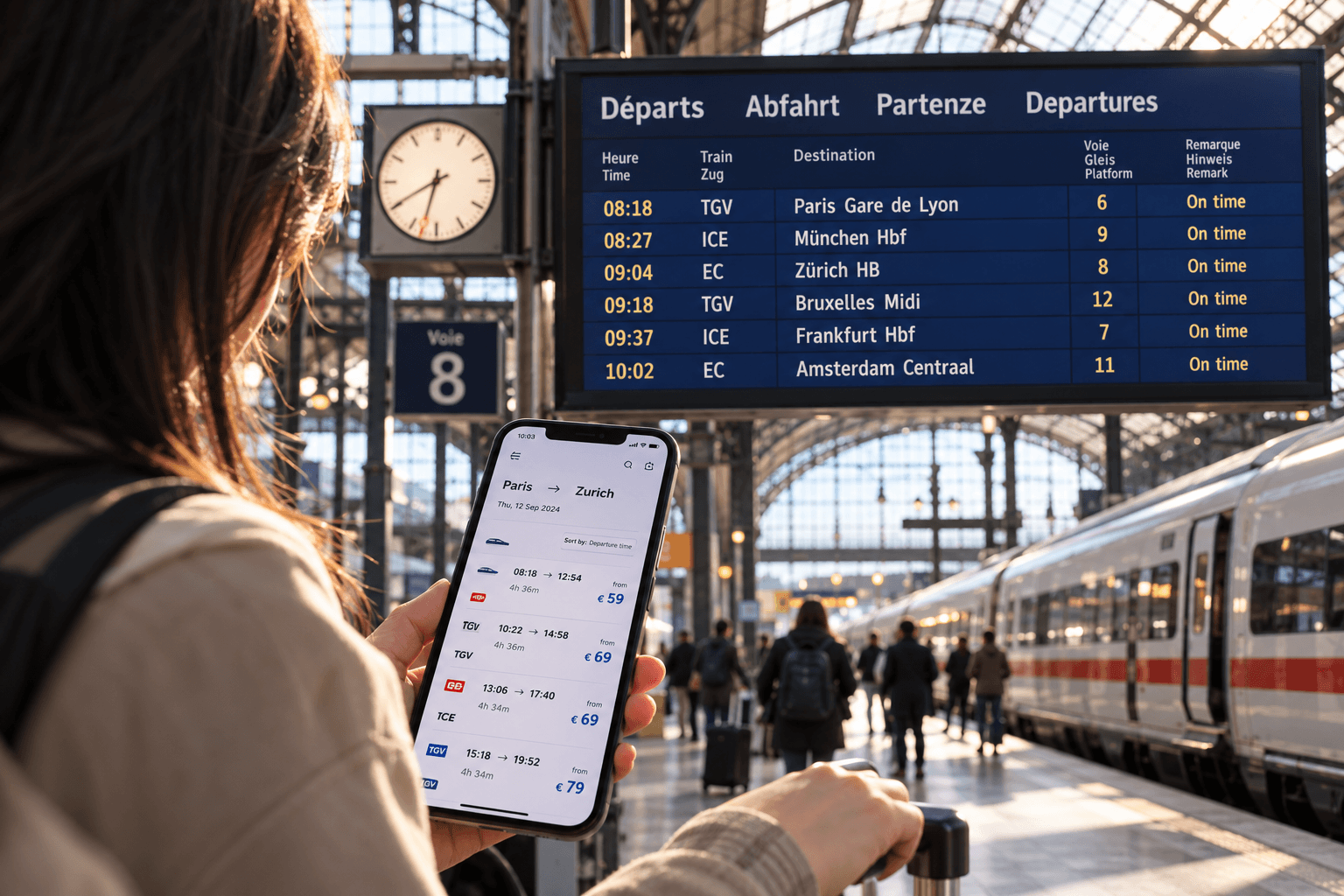
If you are planning a train trip across Europe, one of the most common questions is simple: how far in advance should you book train tickets?
There is no single booking window that applies to every European train. Different operators release tickets at different times, and the best time to book depends on the route, train type, season and how flexible your plans are.
As a practical rule, high-speed and international trains are worth checking early, while regional trains usually require less advance planning. If you are travelling during summer, holidays or on a popular route, booking earlier can also give you more choice.
When should you start checking European train tickets?
For most trips, it is useful to start checking tickets as soon as your travel dates are reasonably fixed.
You do not always need to book immediately. The first step is simply to see whether tickets have been released and what the available fares look like.
Booking earlier becomes more important when:
- you are taking a high-speed train;
- you are travelling internationally;
- you want a specific departure time;
- you are travelling during peak season;
- you are travelling on a Friday, Sunday or public holiday;
- you are travelling with several people and want seats together.
If your trip is flexible and mainly uses regional trains, you may have much more freedom to book closer to departure.

High-speed trains: earlier usually gives you more choice
High-speed trains are one of the main cases where advance planning matters.
Services such as those running between major cities in Italy, France, Spain and other European countries often use fare structures where cheaper ticket options can sell out before the train itself does.
That means the train may still have seats available, but the lowest fare you saw earlier may no longer be offered.
Booking earlier can be especially useful if you want:
- a morning or evening departure;
- a direct train;
- a cheaper restricted fare;
- seats together for a group;
- a specific class of travel.
For example, a popular route such as Rome to Florence has frequent high-speed services, but fare availability can still vary by departure.
See our Rome to Florence by Train Guide for a practical route example.
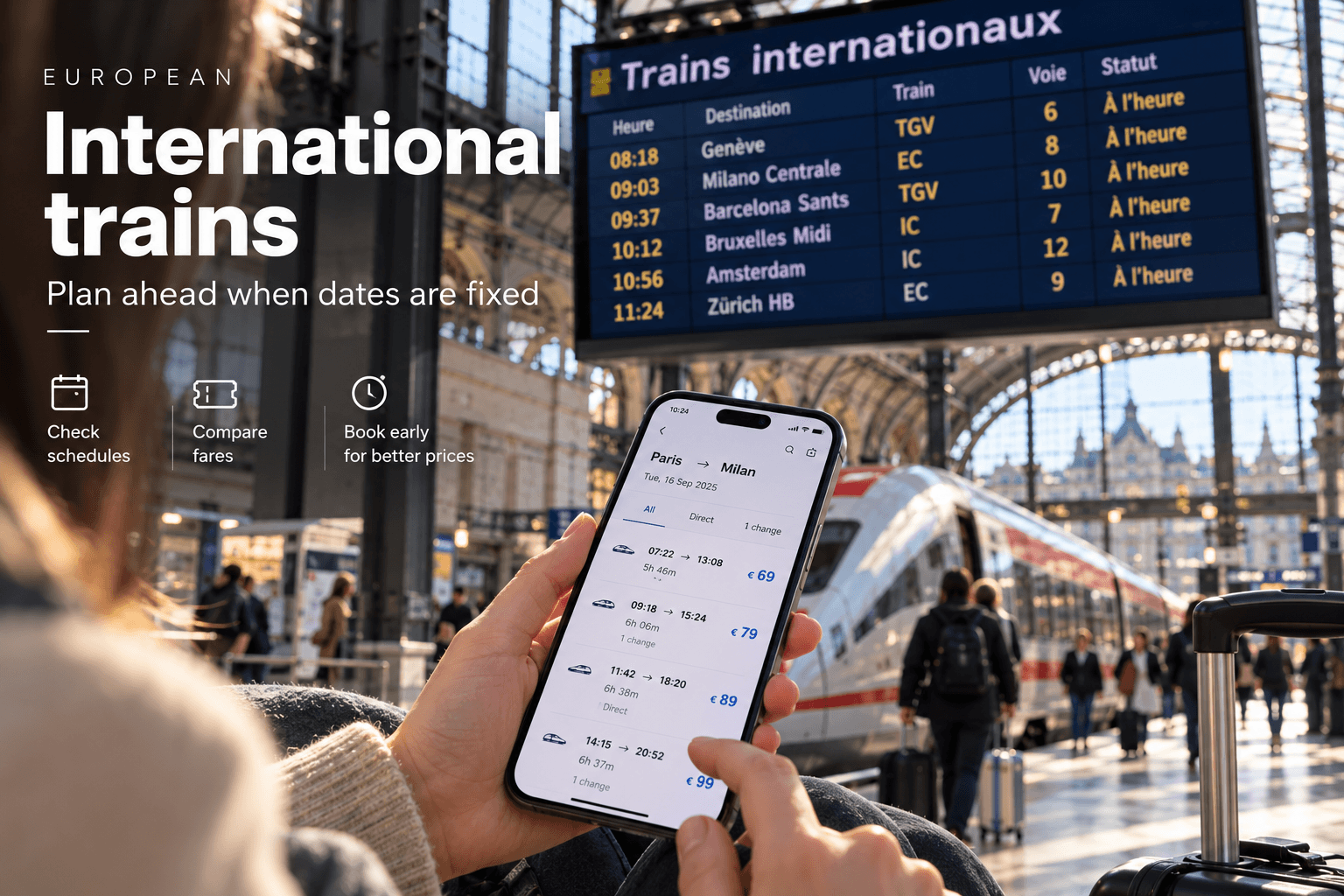
International trains: plan ahead when dates are fixed
International trains usually deserve more advance planning than short regional journeys.
Cross-border routes often have:
- fewer departures than domestic routes;
- higher demand on certain travel days;
- operator-specific booking rules;
- compulsory or assigned seating on some services.
If your itinerary depends on a particular international train, start checking as soon as your dates are confirmed.
This is especially useful when the train forms part of a longer itinerary. Missing your preferred international departure can affect hotel bookings, onward trains and other travel plans.
For multi-country journeys, check each major route separately. Tickets for different countries and operators may not become available at the same time.
Regional trains: advance booking is often less important
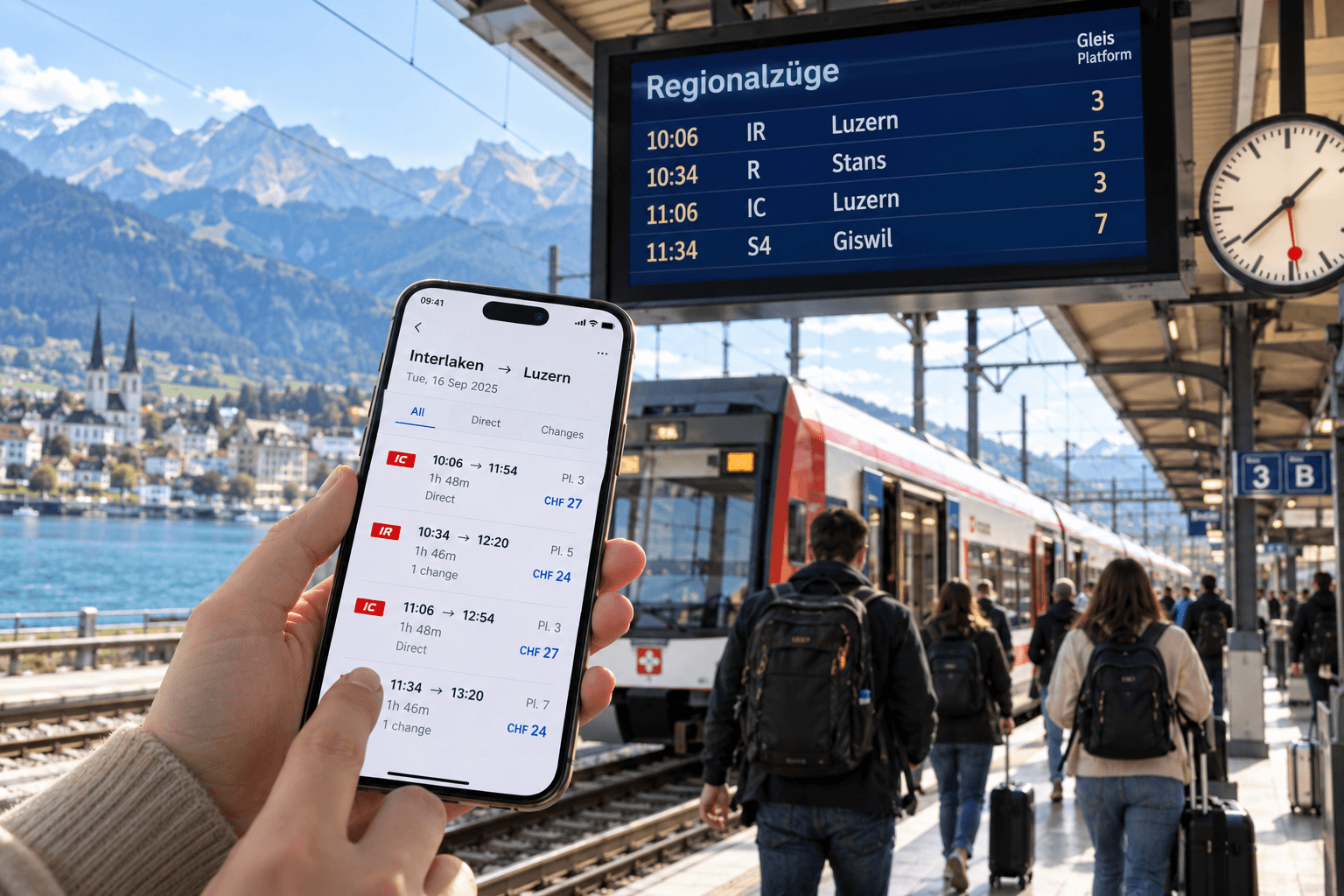
Regional trains generally work differently from high-speed and international services.
They are often designed for shorter journeys and local travel, and in many cases there is less benefit to booking far in advance.
This can make regional trains useful for flexible itineraries where you want to decide your exact travel time later.
However, rules still vary between operators and countries. Always check whether:
- your ticket is tied to a particular train;
- the ticket needs validation;
- there are restrictions on when it can be used;
- seat reservations are available or required.
If you are travelling in Italy, our guide to How to Validate Train Tickets in Italy explains one of the common differences between regional and high-speed travel.
Should you book earlier in summer and during holidays?
Yes. Peak travel periods are one of the strongest reasons to book earlier.
Demand can increase during:
- summer holidays;
- Christmas and New Year;
- Easter;
- long weekends;
- major events;
Popular trains may still operate normally, but the combination of higher demand and limited lower-priced fares can reduce your options closer to departure.
If your dates fall during a busy period, start checking earlier than you would for the same route in a quieter month.
What if tickets are not available yet?
If you search for a future journey and cannot find tickets, the train is not necessarily sold out.
The operator may simply not have released that booking period yet.
This is common when:
- the journey is several months away;
- a new timetable period is approaching;
- engineering work is still being planned;
- seasonal services have not been confirmed.
If your route is not available yet, check again later rather than assuming there will be no train.
For more help with the booking process itself, see How to Book Train Tickets in Europe.
Is it always cheaper to book European trains early?
Not always, but early booking can help on many long-distance and high-speed routes.
The key distinction is between availability and price.
A train may still have tickets available close to departure, but:
- the cheapest fare may be gone;
- flexible fares may be the only remaining option;
- your preferred departure may have limited seats;
- another train at a less convenient time may be cheaper.
Regional trains often have a different pricing structure, so booking early may offer much less benefit.
The best approach is to compare several departure times rather than focusing on a single train.
How early should you book if your itinerary is fixed?
If your hotels, flights and travel dates are already confirmed, there is usually little advantage in waiting once the train you want becomes available and the fare works for you.
Booking earlier can reduce uncertainty around:
- departure times;
- seat availability;
- connections;
- overall trip cost.
This is particularly useful for travellers building an itinerary around several fixed cities.
If your plans are still changing, flexibility may be more valuable than locking in the lowest possible fare.
How early should you book if your plans are flexible?
Flexible travellers can often afford to wait longer.
You may have more options if you can:
- travel earlier or later in the day;
- choose between several departures;
- use a different station;
- travel on a weekday instead of a weekend;
- take a regional train instead of a high-speed service.
In this case, the goal is not simply to book as early as possible. It is to understand which parts of your itinerary actually require advance booking and which can remain flexible.
Check the station before booking early
When booking far in advance, it is easy to focus on the date and price and overlook the station.
Large European cities often have several railway stations, and choosing the wrong one can add extra travel time.
For example:
Before confirming a ticket, check where the station is and how it fits into the rest of your itinerary.
A simple booking strategy for Europe
If you want a practical rule to follow, use this approach:
Book earlier for:
- high-speed trains;
- international trains;
- fixed travel dates;
- peak summer travel;
- weekends and holidays;
- popular routes;
- groups travelling together.
Stay more flexible for:
- regional trains;
- short local journeys;
- trips with flexible dates;
- routes with frequent departures.
The goal is not to book every European train months in advance. It is to identify the journeys where availability, price or timing matters most.
FAQ
How far in advance can you buy train tickets in Europe?
There is no single rule. Booking windows vary by operator, route and timetable period. Some trains are released well in advance, while others become available closer to the travel date.
Is it better to book European train tickets early?
For high-speed, long-distance and international journeys, early booking can give you more fare and departure options. Regional trains often require less advance planning.
Do European train tickets get more expensive closer to departure?
They can. Many long-distance services offer several fare levels, and cheaper options may sell out first. This does not apply equally to every train.
Can I book a European train on the same day?
Often, yes. Same-day booking is common, especially for regional travel. Popular high-speed and international services may offer fewer choices closer to departure.
Why can’t I find tickets for my future travel date?
The operator may not have released tickets yet. Timetable changes, seasonal schedules and planned engineering work can also affect when tickets appear.
Plan your European train journey
The best time to book a train in Europe depends on the type of journey you are taking.
For high-speed, international and peak-season travel, checking early usually gives you more choice. For regional and flexible journeys, you can often leave more decisions until closer to departure.
Once your dates are set, start by checking the routes that matter most to your itinerary and work outward from there.
Search European train routes and tickets with the eutrain app.