

How to Book Train Tickets in Europe: A Step-by-Step Guide
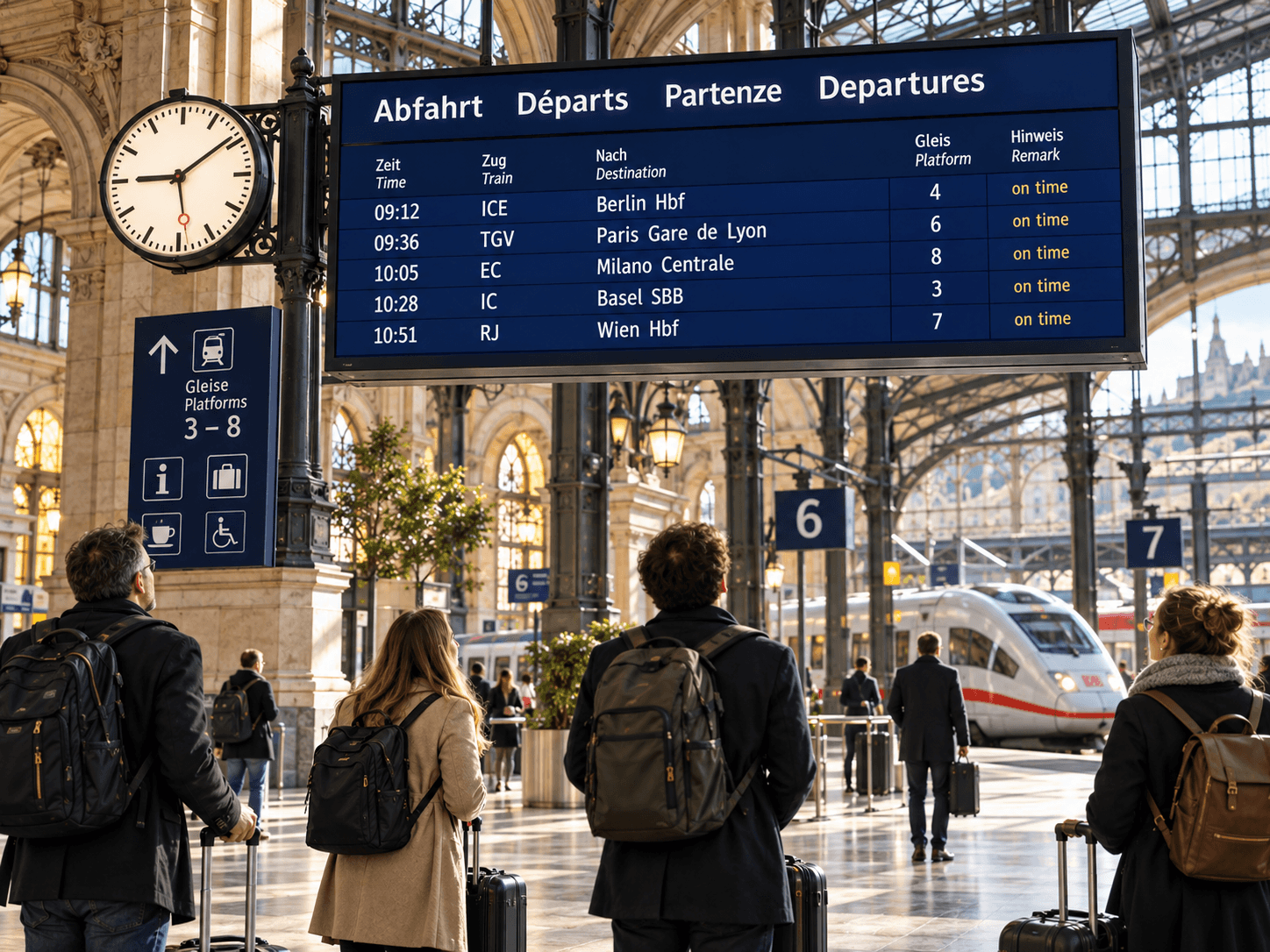
Booking trains in Europe is usually straightforward once you know your route, but the system can feel confusing at first. Different countries use different railway operators, fare rules, booking windows and seat reservation policies.
The easiest way to approach it is one journey at a time: choose your route, compare the available trains, check the ticket conditions, and book the option that works best for your schedule and budget.
If you are new to European rail travel, start with our European Train Tickets Guide for an overview of how train tickets and rail journeys across Europe work.
1. Start with your route and travel date
Before looking at tickets, confirm three things:
- where you are travelling from;
- where you are travelling to;
- the date you want to travel.
Popular European train journeys include:
- Rome to Florence
- Milan to Venice
- Paris to Brussels
- Zurich to Milan
If Italy is part of your itinerary, our Italy Train Travel Guide covers the basics of travelling around the country by rail.
For a real route example, see our Rome to Florence by Train Guide.
2. Search and compare available trains
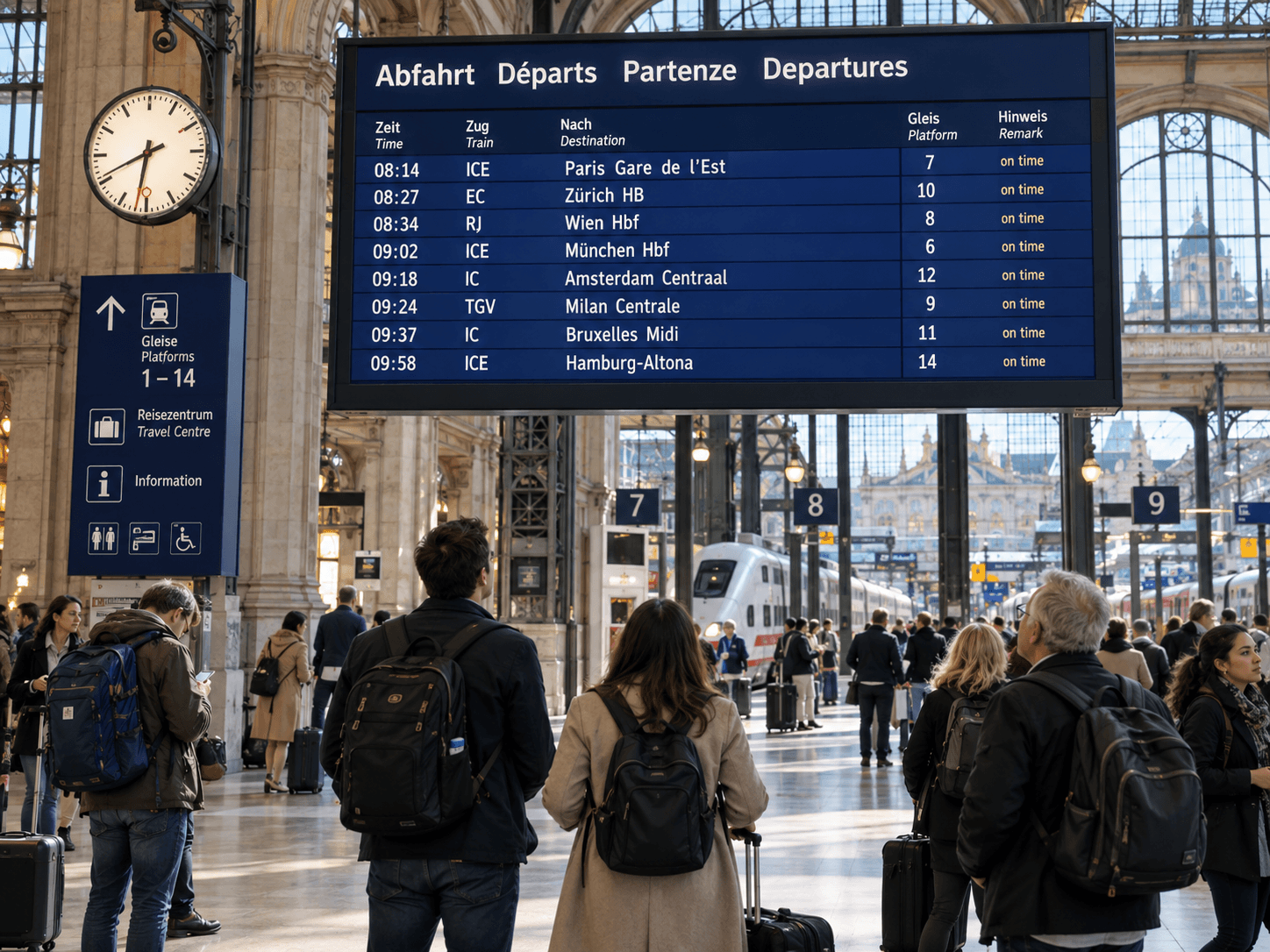
Once you know your route and date, compare the available departures rather than choosing the first train you see.
Look at:
- departure and arrival times;
- total journey time;
- direct trains versus connections;
- departure and arrival stations;
- train operator;
- ticket price;
- change and refund conditions.
The cheapest train is not always the most practical option. A direct journey may be worth paying slightly more for if the alternative involves a long connection or several transfers.
For travellers moving between several European countries, using one train app can also make route planning easier than checking multiple railway websites separately.
Planning a trip? Search European train routes and tickets with the eutrain app.
3. Check which train operator runs the journey
Europe does not have one single railway operator.
Depending on the country and route, you may travel with companies such as Trenitalia, Italo, SNCF, Deutsche Bahn, ÖBB, SBB or Eurostar.
The operator matters because it can affect:
- ticket types;
- seat reservation rules;
- luggage policies;
- exchange and refund conditions;
- onboard services.
If you are travelling in Italy, for example, high-speed journeys may be operated by Trenitalia or Italo. Our Trenitalia vs Italo Guide explains the main differences between the two.
Always check the operator before choosing your fare.
4. Compare fare types, not just prices
Many European trains offer more than one fare for the same departure.
Lower-priced tickets often come with stricter conditions, while more flexible fares may allow changes or refunds at a higher price.
Before booking, please check:
Changes
Can you move your ticket to another departure? Is there a fee?
Refunds
Can you cancel the ticket? How much is refundable?
Train restrictions
Is the ticket valid only for the train you selected, or can you use another service?
Seat reservation
Is a seat included, optional or required separately?
If your travel plans are fixed, a cheaper restricted fare may make sense. If your itinerary could change, paying more for flexibility can sometimes save money later.
5. Decide when to book
There is no single rule for how early European train tickets should be booked.
Long-distance, high-speed and international services often use advance fares, so checking earlier can give you more choice. Regional trains are generally more flexible.
It is worth booking earlier when travelling:
- during summer;
- around major holidays;
- on Fridays or Sundays;
- on popular high-speed routes;
- on international routes;
- when your itinerary is fixed.
If tickets for your date are not yet available, the operator may simply not have opened that booking period yet.
6. Check the station carefully
One of the easiest mistakes to make when booking trains in Europe is choosing the wrong station.
Large European cities often have several railway stations, so always check the complete station name before paying.
For example, if you are travelling through Milan, our Milano Centrale Train Station Guide explains what to expect at the city's main rail hub.
For Florence, see our Firenze Santa Maria Novella Train Station Guide.
Before booking, check:
- the full station name;
- where the station is located;
- how long it takes to reach from your accommodation;
- whether you need to change stations during a connecting journey.
7. Leave enough time for connections
If your journey involves more than one train, check the transfer time carefully.
A connection that looks efficient on paper can become stressful if you need to:
- walk across a large station;
- change platforms with luggage;
- move between different railway stations;
- deal with a delayed first train.
For more complicated journeys, a slightly longer connection is often easier to manage.
It is also useful to know what happens if things go wrong. If you are travelling in Italy, see our guide on What to Do If You Miss Your Train in Italy.
8. Understand whether your ticket needs validation
Ticket rules vary between countries, operators and ticket formats.
Digital tickets for many high-speed services are usually tied to a specific journey, while some regional or locally purchased tickets may follow different validation rules.
Always check the instructions attached to your ticket before boarding.
If you are travelling in Italy, read our guide on How to Validate Train Tickets in Italy to understand when ticket validation may be required.
9. Enter passenger details correctly
Some operators require passenger information before issuing a ticket.
Depending on the journey, this may include:
- full name;
- date of birth;
- email address;
- discount card or railcard details.
Where a ticket is issued in a passenger's name, make sure the information matches the travel document you will use during the journey.
10. Review everything before paying
Before confirming the booking, check the whole journey one final time.
Make sure you have the correct:
- travel date;
- departure time;
- departure station;
- destination;
- passenger details;
- train operator;
- fare type;
- refund and change conditions.
This takes less than a minute and prevents many common booking mistakes.
11. Save your ticket somewhere easy to access
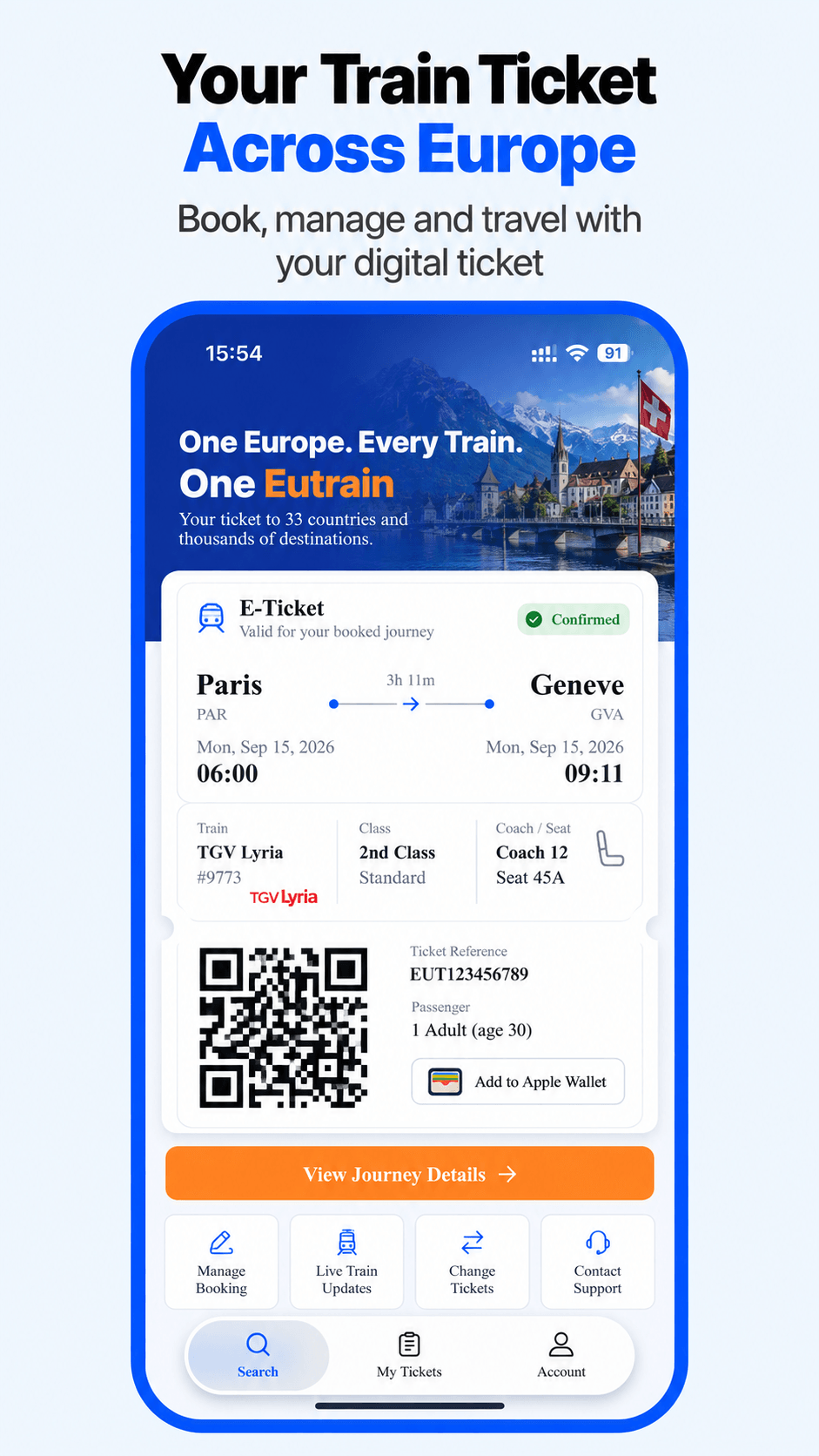
Many European rail journeys support digital tickets, so you may only need the ticket on your phone.
After booking, check whether your ticket contains:
- a QR code or barcode;
- train number;
- coach number;
- seat number;
- booking reference;
- departure station and time.
Keep the ticket somewhere easy to access before boarding. Where permitted, keeping an offline copy can also be useful if mobile data is unreliable.
Where should you buy train tickets in Europe?
There are two common options.
Buy directly from the railway operator
This works well if you already know which operator runs your train or if your journey stays within one railway network.
Use a multi-country train platform or app
This can be more convenient when your itinerary includes several cities, countries or railway operators.
A useful booking tool should help you compare:
- routes;
- journey times;
- operators;
- departure and arrival stations;
- available ticket options.
For multi-country trips, keeping route searches and journey information in one place can make planning much easier.
With eutrain, you can search European train journeys and access ticket information from your phone.
Search European train routes and tickets with the eutrain app.
Can you buy train tickets at the station?
In many cases, yes.
However, buying on the day of travel may mean fewer options for popular high-speed or international services, and lower fares may already have sold out.
Station purchase is generally more practical for flexible regional travel than for a fixed long-distance itinerary.
If you already know when you want to travel, checking tickets in advance gives you more time to compare your options.
How can you find cheaper train tickets in Europe?
A few simple habits can help:
- compare several departure times;
- check tickets before peak travel dates;
- compare more than one fare type;
- book popular long-distance journeys earlier;
- avoid paying for flexibility you do not need;
- compare direct trains with connecting services.
The cheapest fare is not always the best value, so check what the ticket includes before booking.
Common mistakes when booking European trains
Booking the wrong station
Always check the complete station name.
Ignoring fare conditions
A low fare may come with strict change or refund rules.
Choosing an unrealistic connection
Allow enough time to change trains and platforms.
Assuming every train requires a reservation
Reservation rules vary by train and operator.
Assuming all European railways work the same way
Ticket rules and booking systems differ between countries and operators.
FAQ
What is the easiest way to book train tickets in Europe?
For a simple domestic journey, booking directly with the railway operator can work well. For multi-country trips or journeys involving several operators, a train booking platform or app can make comparison easier.
Can I book European train tickets online?
Yes. Most major European railway operators and booking platforms support online or mobile booking.
Should I book European trains in advance?
Advance booking is particularly useful for high-speed, long-distance and international trains. Regional trains usually offer more flexibility.
Can I use a train ticket on my phone?
Many European routes support digital tickets, although requirements vary by operator and ticket type. Always check the instructions provided with your ticket.
Do European trains include seat reservations?
It depends on the service. Some high-speed and international trains include or require seat reservations, while many regional trains use open seating.
Are European train tickets refundable?
Refund rules depend on the operator and fare type. Discounted tickets are often more restrictive than flexible fares.
Start planning your European train journey
Booking train tickets in Europe becomes much easier when you focus on a few basics: choose the correct route and station, compare several departures, understand the fare conditions and check your ticket before travelling.
For a multi-city or multi-country trip, keeping your train searches and journey information together can make the whole process easier to manage.
Search European train routes and tickets with the eutrain app.