

Milan to Venice by Train: Santa Lucia or Mestre?

Travelling from Milan to Venice by train is one of the easier city-to-city journeys in northern Italy. Direct high-speed trains leave Milan throughout the day, and the fastest services reach Venice in about two and a half hours.
The part that deserves more attention is not the train itself.
It is the destination station.
When searching for tickets, you will probably see both Venezia Santa Lucia and Venezia Mestre. They are both Venice railway stations, but they are not interchangeable if your hotel is on Venice island.
For most first-time visitors staying in the historic centre, Venezia Santa Lucia is the station you want.
The short answer: take a direct high-speed train
The simplest journey is:
Milano Centrale → direct high-speed train → Venezia Santa Lucia
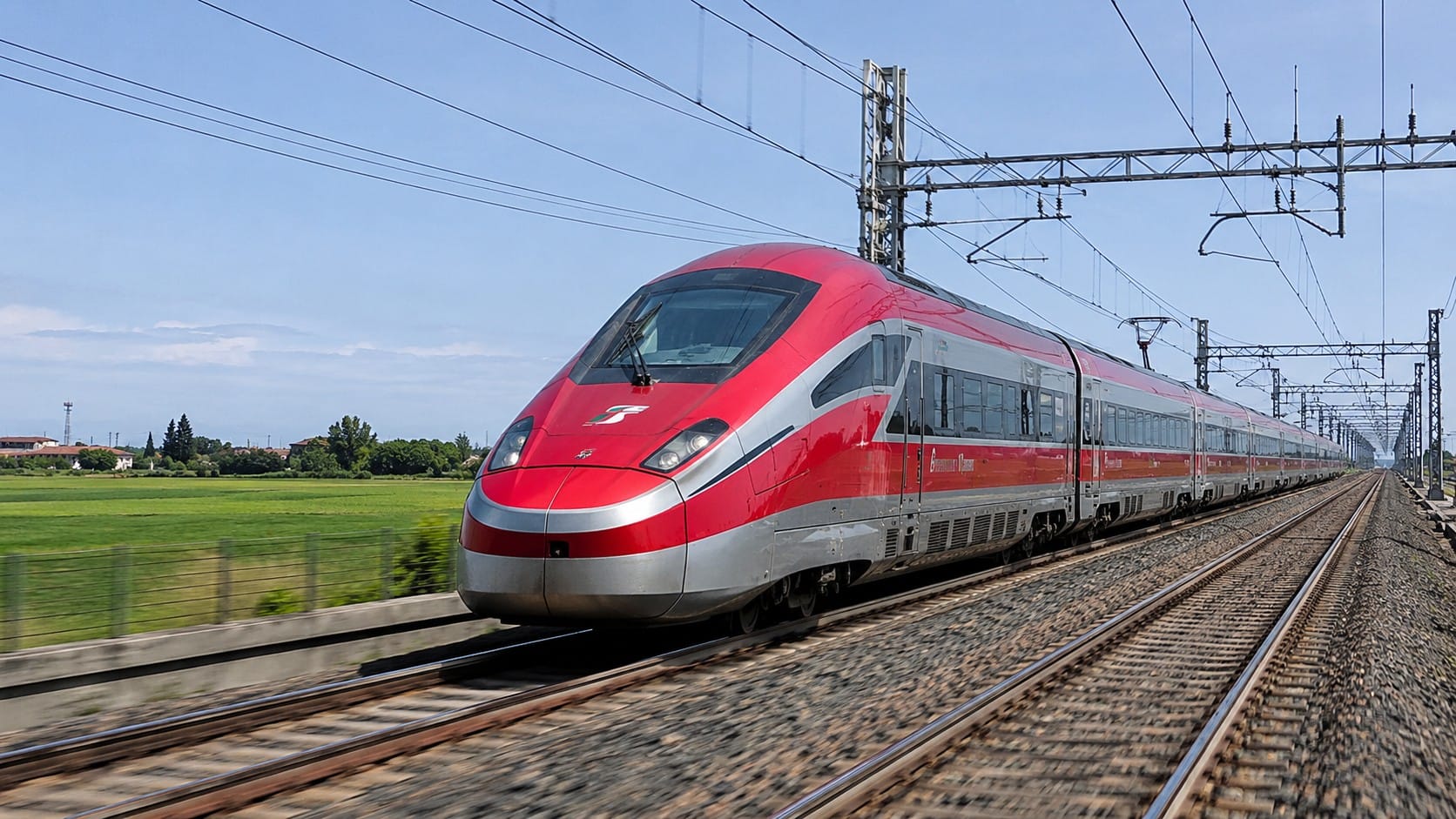
Both Trenitalia and Italo operate high-speed services between Milan and Venice.
Trenitalia currently lists Milan–Venice Frecciarossa journeys from around 2 hours 27 minutes, with up to 44 daily connections, although schedules can vary at weekends and during certain periods. Italo lists Milan–Venice at around 2 hours 30 minutes.
That makes the train particularly convenient because you leave from central Milan and, if you book Santa Lucia, arrive directly in Venice's historic centre without an airport transfer or long drive.
If you're unfamiliar with the departure station, our Milano Centrale Train Station Guide explains the layout, platforms and metro connections.
The real decision: Venezia Santa Lucia or Venezia Mestre?
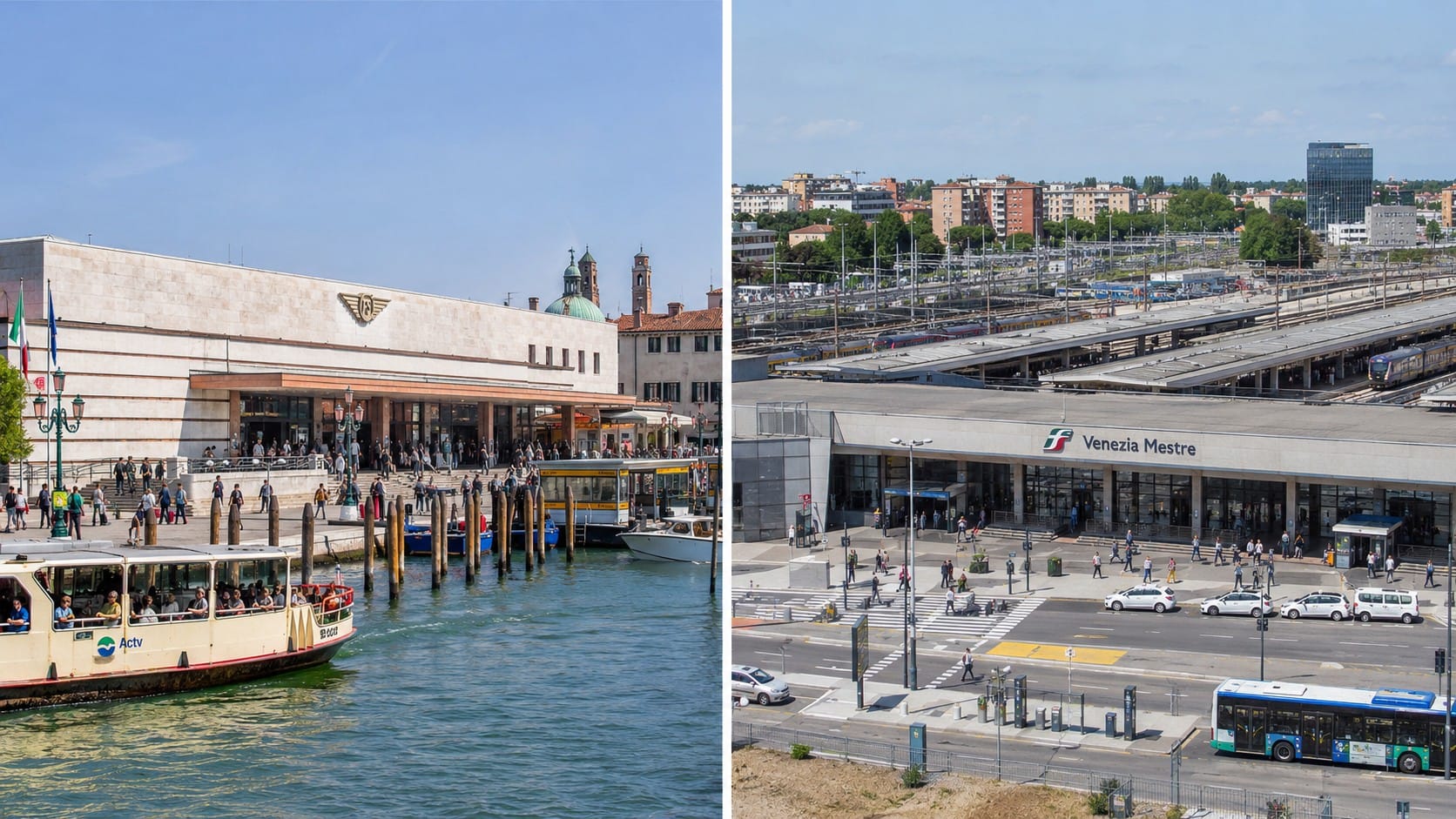
Venice officially has two main railway stations: Venezia Mestre and Venezia Santa Lucia.
For a visitor, the important difference is geography.
Venezia Santa Lucia
Santa Lucia is the railway station on Venice island.
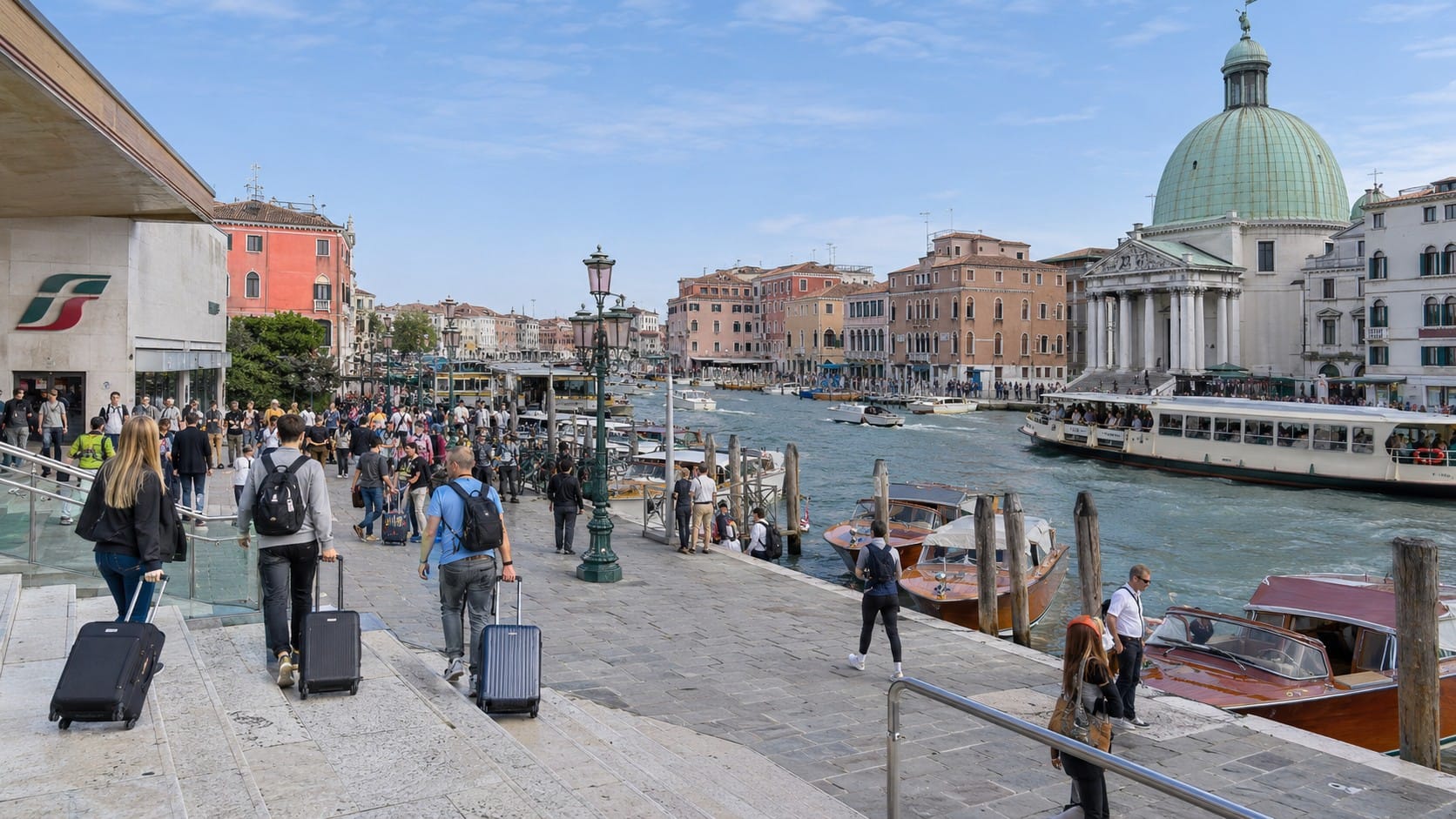
Walk out of the station and you are immediately beside the Grand Canal, with Venice's historic centre in front of you.
If you are staying around areas such as:
- Cannaregio
- San Polo
- Santa Croce
- San Marco
- Dorsoduro
Santa Lucia will usually be the more useful arrival station.
You can continue on foot or take a vaporetto depending on where your accommodation is.
Venezia Mestre
Mestre is on the mainland.
It is still part of Venice, but it is not the station most tourists imagine when they think of arriving “in Venice”.
Mestre can be the better choice if:
- your hotel is in Mestre;
- you are staying on the mainland to reduce accommodation costs;
- your onward journey starts from Mestre;
- your itinerary specifically requires a mainland connection.
For most travellers spending their first few days sightseeing in historic Venice, however, booking Santa Lucia avoids an unnecessary extra transfer.
Check the station before you pay
This is worth doing every time you search for a Milan to Venice train.
A result showing “Venice Mestre” may look almost identical to one showing “Venice Santa Lucia”, especially when departure times and prices are similar.
Do not choose based only on the cheapest fare.
Look at the full station name:
Venezia S. Lucia / Venezia Santa Lucia → Venice island
Venezia Mestre → mainland
Many long-distance services travel through Mestre before reaching Santa Lucia. Trenitalia notes that most of its Venice high-speed connections arrive at Santa Lucia, while some routes use Mestre.
If your hotel is on the island, search specifically for Venezia Santa Lucia when comparing tickets.
How long is the train from Milan to Venice?
Direct high-speed trains normally take around 2.5 hours.
The fastest current Frecciarossa journey is listed at approximately 2 hours 27 minutes, while Italo publishes a Milan–Venice journey time of around 2 hours 30 minutes.
Exact journey times depend on:
- the train you choose;
- intermediate stops;
- the final Venice station;
- timetable changes.
Typical stops on this corridor can include Brescia, Verona, Vicenza and Padua.
You will also find slower services when searching. They can sometimes be useful, but for most visitors travelling directly between the two cities, the high-speed options are easier to compare.
Frecciarossa or Italo?
There is no single operator that is always the better choice.
For this route, I would compare the actual departures rather than choosing the company first.
Look at:
Departure time
A slightly more expensive train may be worth it if it fits your hotel checkout or arrival plans better.
Arrival station
Make sure the service goes where you actually need to go, particularly Santa Lucia versus Mestre.
Journey time
Some departures make more intermediate stops than others.
Fare conditions
The cheapest ticket may be much less flexible.
Overall price
Compare equivalent departure times rather than just each operator's advertised lowest fare.
Trenitalia's discounted Economy and Super Economy inventory is limited and can carry tighter change and refund conditions than its more flexible Base fares.
Italo uses its own fare structure and conditions, so check the rules attached to the specific ticket rather than assuming the two operators work the same way.
For a fuller comparison, see our Trenitalia vs Italo guide.
Want to compare train options for your travel date? Search Milan–Venice routes with the eutrain app.
How much does the Milan to Venice train cost?
There is no single fixed price for this route.
High-speed fares vary according to:
- travel date;
- departure time;
- demand;
- operator;
- fare type;
- how early you book.
This is why two trains leaving on the same day can have noticeably different prices.
If your dates are fixed, it usually makes sense to check high-speed tickets earlier rather than waiting until the day of travel. Discounted fare inventory is limited, and the cheaper options may disappear as a train fills.
But do not choose a cheaper ticket without reading the conditions.
Saving a few euros may not be worthwhile if your plans are uncertain and the fare cannot be refunded or easily changed.
For more on timing your purchase, see How Far in Advance to Book Train Tickets in Europe.
You can also read our guide to finding cheap train tickets in Europe if price is your main concern.
Do you need to change trains?
Not if you choose a direct service.
There are direct high-speed trains from Milan to Venice, so a change in Verona, Padua or another city is unnecessary for most journeys.
When comparing search results, look for:
Direct / 0 changes
A cheaper itinerary with a connection can occasionally appear, but on a route with frequent direct trains, I would usually only choose it if there were a clear advantage in price or timing.
Changing trains adds another platform, another potential delay and another piece of logistics that you simply do not need on most Milan–Venice trips.
What about slower or regional trains?
Regional trains are useful across northern Italy, but they solve a slightly different problem.
If your priority is simply travelling from Milan to Venice efficiently, a direct Frecciarossa or Italo service is usually the easiest option.
Regional trains may appeal if:
- your itinerary includes stops along the way;
- you are travelling somewhere between Milan and Venice;
- the schedule suits you better;
- you are deliberately keeping the trip flexible.
Be careful when comparing prices because a slower itinerary may involve additional changes.
The cheapest-looking result is not necessarily the best value once journey time and transfers are included.
Is Milano Centrale the right station in Milan?
Usually, yes.
Milano Centrale is Milan's main long-distance railway station and a major departure point for Venice.
But Milan has several other stations, including Porta Garibaldi and Rogoredo, so always check the exact departure point shown on your booking.
If your ticket says Milano Centrale, allow enough time to reach the main concourse and find your platform.
The station is large, but all mainline platforms are grouped together at the end of the concourse.
Arriving at Santa Lucia feels very different from arriving at Mestre
This is one of the reasons I would choose Santa Lucia for a first visit.
At many European stations, arriving simply means finding a metro or taxi into the city.
At Santa Lucia, you walk out of the station and immediately see the Grand Canal.
From there you can:
- walk to your accommodation;
- take a vaporetto;
- connect toward Rialto or San Marco;
- continue to another part of the lagoon.
There are no cars waiting outside the station to take you through central Venice because historic Venice is largely car-free.
If your hotel is a long walk away and you have heavy luggage, check the nearest vaporetto stop before travelling rather than trying to work it out with suitcases after arrival.
What if you accidentally book Venezia Mestre?
Do not panic, but check your ticket before boarding another train.
Mestre and Santa Lucia are connected by frequent rail services, and many trains arriving from the mainland continue across the lagoon to Santa Lucia.
However, you should not assume that a ticket ending at Mestre automatically gives you the right to continue farther.
Check whether your original train continues to Santa Lucia and whether your ticket covers that station.
If not, buy the appropriate onward ticket before continuing.
This is much easier than discovering the difference only after you have arrived at Mestre.
Travelling with luggage
High-speed rail is particularly convenient on this route because you keep your luggage with you rather than checking it in as you would on a flight.
Still, Venice adds one extra consideration: what happens after the train.
A suitcase that is easy to roll through Milano Centrale may be more annoying over bridges and narrow streets in Venice.
Before travelling, check:
- how far your hotel is from Santa Lucia;
- whether a vaporetto is useful;
- whether your accommodation has stairs;
- whether you really want to carry multiple large bags through Venice.
This does not change which train you take, but it can make a big difference to the arrival experience.
Milan to Venice by train FAQ
Is there a direct train from Milan to Venice?
Yes. Trenitalia Frecciarossa and Italo both operate direct high-speed services between Milan and Venice.
How long is the train ride from Milan to Venice?
The fastest current Frecciarossa services are listed from around 2 hours 27 minutes, while Italo lists the journey at around 2 hours 30 minutes.
Which Venice train station should I choose?
For most visitors staying in Venice's historic centre, choose Venezia Santa Lucia.
Choose Venezia Mestre if you are staying on the mainland or have a specific connection there.
Is Venezia Mestre the same as Venezia Santa Lucia?
No. Mestre is on the mainland, while Santa Lucia is on Venice island. Venice officially lists them as two separate railway stations.
Which company is better, Trenitalia or Italo?
Both operate high-speed trains on the route. Compare departure time, journey time, fare conditions, price and arrival station for your actual travel date.
Should I book the Milan to Venice train in advance?
If you want a particular high-speed departure or a lower promotional fare, booking earlier can help because discounted ticket inventory is limited.
Do I need to validate a Frecciarossa or Italo ticket?
High-speed tickets are tied to a specific booked service and do not use the traditional paper-ticket validation process associated with some regional tickets.
Can I visit Venice as a day trip from Milan?
It is possible, but with roughly 2.5 hours of travel each way, you will spend around five hours of the day on trains. For many travellers, staying at least one night gives Venice more breathing room.
The one thing to check before booking
The Milan–Venice train itself is easy.
The mistake worth avoiding is booking the wrong Venice station.
If you are travelling to the canals, bridges and historic centre most visitors have in mind when they say “Venice”, search for:
Venezia Santa Lucia.
If you are staying on the mainland, Mestre may be exactly what you need.
Once that decision is clear, the rest is mostly a matter of comparing departure times, operators and ticket conditions.
Ready to compare Milan to Venice trains? Search routes and ticket options with the eutrain app.


